Key Takeaways
- A dental aide supports the team with setup, sterilization, and room prep, while a dental assistant works chairside in a regulated role.
- Dental aide training is shorter and works well as a first step into the field.
- A dental assisting diploma in Canada prepares you to write the national NDAEB exam and register with your provincial regulator.
- Risio’s Alberta dental assisting diploma is accredited by the Commission on Dental Accreditation of Canada (CDAC).
- You can start as a dental aide and move into the diploma program later.
You want to work in a dental office, but you’re not sure where to start. Do you take a shorter program and get your foot in the door, or commit to the full diploma? At Risio Institute for Digital Dental Education, students ask this question all the time, and the right answer depends on your goals, your timeline, and how far you want to grow.
Choose the dental aide path if you want a faster way to start working in a dental office, with shorter training and no formal certification required. Choose the dental assistant path if you want a regulated career with intraoral chairside duties, a nationally recognized credential, and more room to grow.
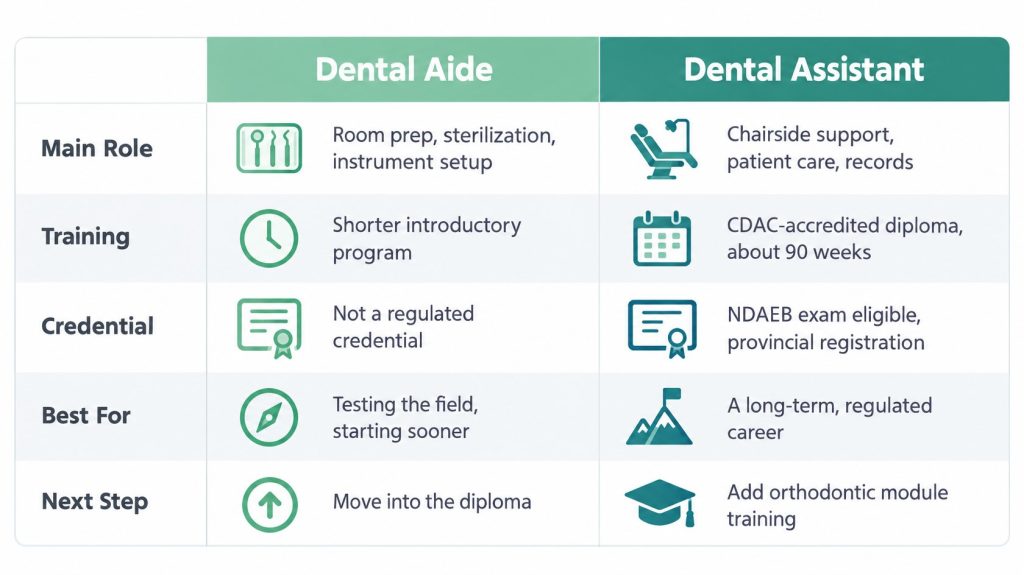
Dental Aide vs. Dental Assistant at a Glance
Here’s how the two paths compare side by side.
Choose the Dental Aide Path If…
The dental aide path works well when you want to test the waters before making a bigger commitment. It may suit you if:
- You’re in high school, a recent graduate, or new to dentistry and want to see if the field fits you
- You’d like to start working in a dental office sooner
- You prefer support work, like preparing rooms, sterilizing instruments, and keeping the clinic running smoothly
Dental aide certification in Canada isn’t a regulated credential the way dental assisting is, so aides don’t perform chairside clinical duties. Think of it as an entry point that helps you learn the rhythm of a dental practice before you decide on your next step.
Choose the Dental Assistant Path If…
The dental assistant path suits you if you’re ready to commit to a long-term career in dentistry. It may be the better fit if:
- You want to work chairside, supporting the dentist during procedures and caring for patients
- You want a credential that’s recognized across Canada
- You’d like to keep growing with options like orthodontic module training once you’re registered
A dental assisting diploma in Canada takes longer to complete. Risio’s CDAC-accredited program in Alberta runs about 90 weeks, and graduates are eligible to write the National Dental Assisting Examining Board (NDAEB) exam, the step before registering with your provincial regulator. The program also qualifies for student loan funding.

Can You Start as an Aide and Move Up Later?
Yes, and many people do. Starting as a dental aide lets you build confidence and work experience in a real practice. When you’re ready, you can apply to the dental assisting program and build on what you already know.
Risio’s diploma is designed so you can keep working while you study. Many students already work in a dental office, and some practices support their team members’ tuition as they train.
Questions to Ask Before You Decide
Your answers to these questions can point you toward the right path:
- How soon do I want to start working in a dental office?
- Do I want chairside patient care or behind-the-scenes support work?
- Am I ready to commit to a longer program for a regulated credential?
- Do I need flexible, online study so I can keep my job or stay in my community?
Still unsure? Try Risio’s free online course to get a feel for the material before you apply.
Flexible Learning for Both Paths
Where you live doesn’t have to limit your options. Risio’s online dental assisting program lets you complete coursework from home, then attend in-person clinical training days in Calgary, Alberta to practise hands-on skills.
Distance dental education across Canada opens the door for students in rural and remote areas who can’t relocate for school. You keep your routine while you build toward a new career.
Take the Next Step
Whether you’re starting fresh or planning a dental assistant career change, the right path is the one that matches your goals. Explore Risio’s programs to compare the dental aide and dental assisting options, and reach out to the team with any questions about which path fits you.