Key Takeaways
- Dental assisting involves sustained postures, repetitive hand movements, and physical stamina during each shift.
- Back, neck, shoulder, and wrist tension can develop without good ergonomic habits, but is manageable with the right approach.
- Simple daily practices like core strengthening and targeted stretching can help support your body over time.
- Quality clinical training prepares you for real-world physical demands before you step into a practice.
The Real Physical Side of Dental Assisting
You’ve probably researched what dental assistants do, the procedures they support, the instruments they handle, and the pace of a clinical day. But there’s one part of the role that doesn’t always come up in program brochures: the physical demands on your body.
At Risio Institute for Digital Dental Education, we build physical preparation into our training model, so you can better understand what the role asks of your body. If you’re weighing your options, looking at the steps to becoming a dental assistant is a good place to start.
Dental assisting is physically active work that calls for sustained posture, precise hand control, and the kind of stamina that you build over time with the right habits. Knowing what to expect before you start your training can help you prepare not just mentally, but also physically.
The Body Positions You Hold Throughout the Day
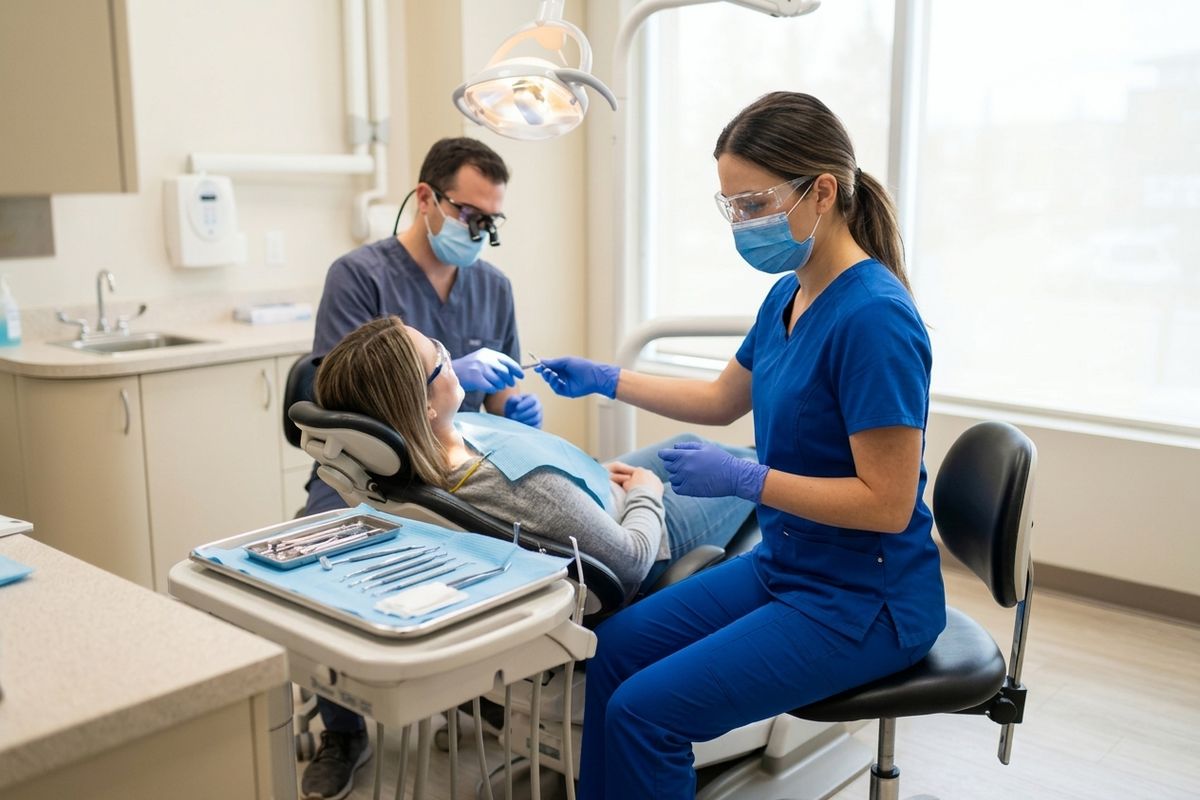
A dental assistant’s workday isn’t spent at a desk. You’re seated on a rolling stool for long stretches, often leaning forward toward the patient to assist during procedures. You shift between sitting and standing as each step of treatment progresses.
That constant reaching, twisting, and bending toward the chair puts quiet pressure on your spine, hips, and neck. That’s why it’s important to build good habits that support proper posture.
Learning about proper posture and body mechanics early in your training can give you a useful framework as you start working alongside the dental team.
The Hand & Fine Motor Skills of Dental Assisting
Precision Work with Small Instruments
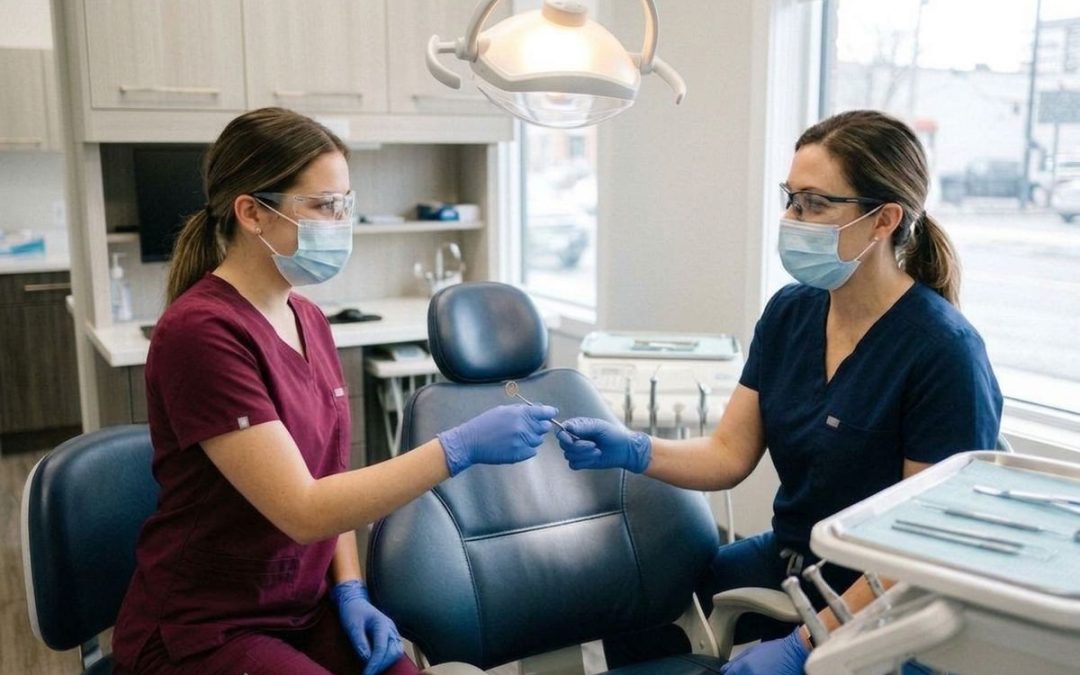
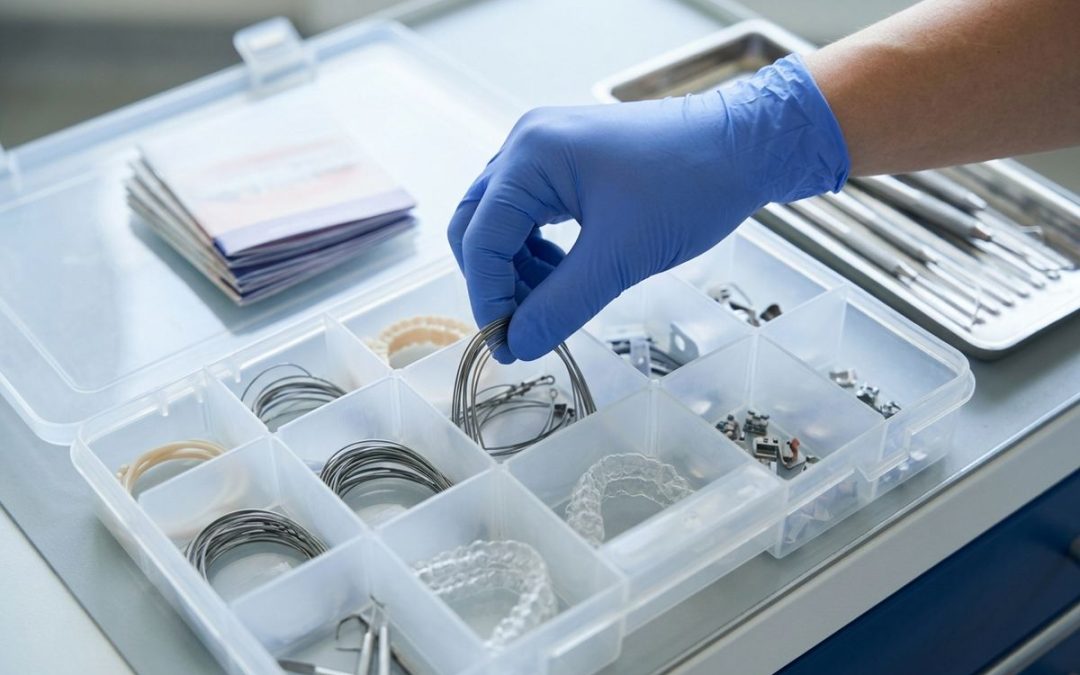
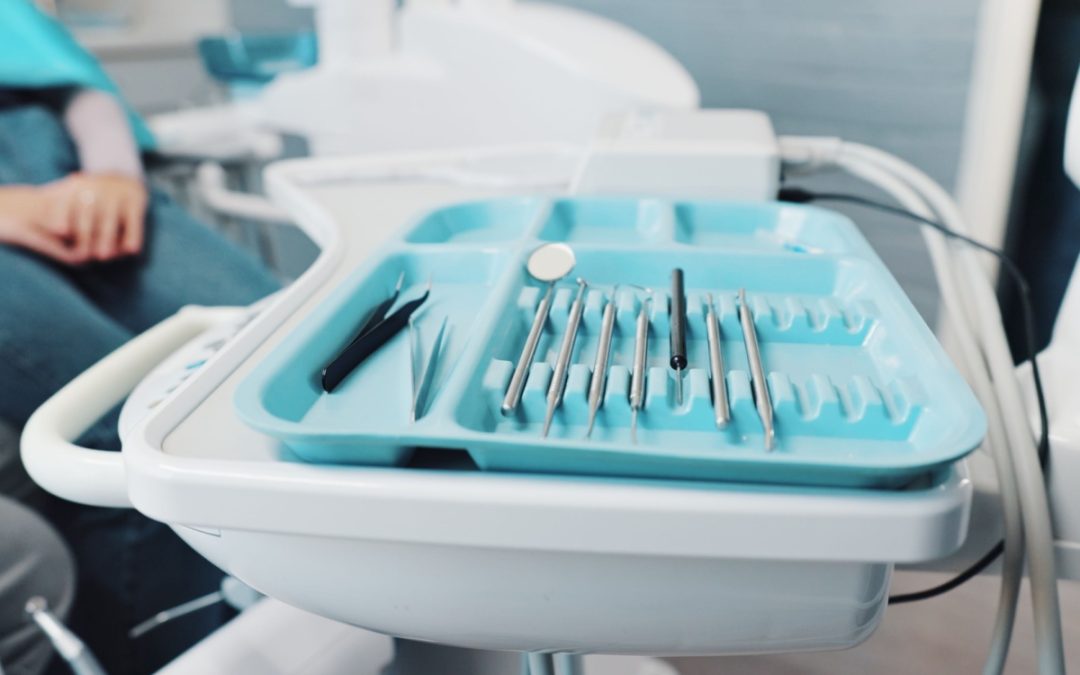
Much of what a dental assistant does happens in a small space with small instruments. You’re grabbing and passing instruments accurately, often while the dentist is mid-procedure. Steady hand control isn’t optional. Your precision helps care run smoothly for both the patient and the dental team.
However, reading about instrument transfer and actually doing it are two very different experiences. That’s why our dental assistant diploma program pairs online coursework with in-person clinical training; so that you can develop hands-on skills in a real practice setting.
Because Risio students work in dental offices throughout the program, you get to build these physical habits in real clinical settings, with real patients, under the guidance of the team around you. By the time you finish your training, your body has already adapted to the rhythm of a clinical day.
Repetitive Hand & Wrist Movements
You’ll repeat many of the same micro-movements for each patient. Over a full shift, these small motions can add stress to your hands and wrists.
Wrist strain is a real occupational concern for dental assistants who don’t address it proactively. It’s not inevitable, but it does require foresight and attention. Small changes in how you hold and position instruments can make a meaningful difference over a long career.
How Physical Demands Show Up in Your Day
After a full clinical day, you may notice some tiredness in your back, neck, or shoulders. That’s where most of the postural load tends to settle. Your hands and wrists can also feel the effects of repetitive motion, especially on busier days with back-to-back procedures.
This is a normal part of physically active work, and it’s manageable with the right habits. Dental assistants who pay attention to posture, build supportive routines outside of work, and listen to their bodies build long, healthy careers in this field. Going in with that mindset from day one makes a real difference. We offer career insights and education resources to help you understand the full picture of what clinical work involves day-to-day.
Practical Ways to Protect Your Body on the Job
Posture & Ergonomic Habits
A neutral spine position, where your back isn’t rounded forward or arched too far back, takes pressure off your lower back and neck during procedures. It’s also something you can build into your clinical routine.
Where you place instruments and overhead light also matters. When instruments and equipment are positioned to reduce unnecessary reaching, you move less awkwardly and put less strain on your body during the day.
Movement & Strength Outside of Work
Core strength supports better posture when you’re seated at the chair for hours. You don’t need an intense fitness program. Consistent, moderate movement that targets your core, back, and shoulders can help your body handle the physical demands of clinical work.
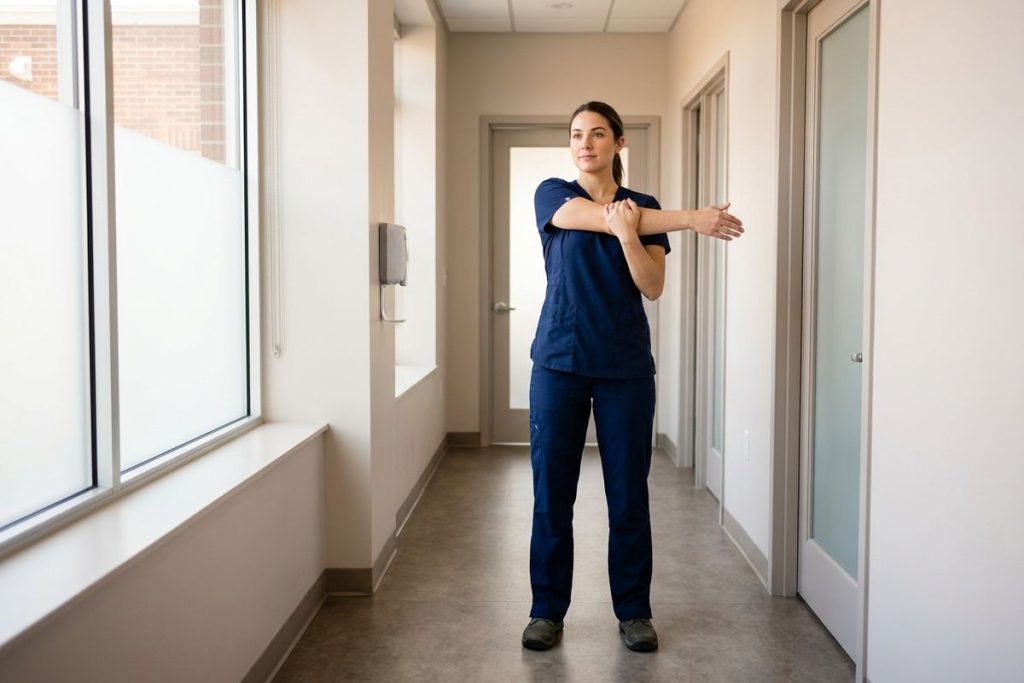
Stretching your wrists, neck, and shoulders throughout the day matters too. Even a few minutes of stretching between patients can reduce the buildup of tension that contributes to longer-term discomfort.
What This Means for Your Dental Assisting Career Path
Physical awareness isn’t a side note to a dental assisting career. It’s part of how you sustain one. Dental assistants who understand their body’s limits and build smart habits early tend to have more longevity in the role.
Good training reflects that reality. A program that pairs online coursework with actual in-person clinical practice gives you the chance to experience real procedure conditions, not just read about them. You get to feel what proper instrument transfer looks like, what a full day at the chair actually asks of your body, and how to move through it confidently. For those interested in expanding their scope after certification, the orthodontic module training program builds on your clinical foundation with additional skills.
At Risio Institute for Digital Dental Education, we offer a dental assisting diploma program for students across Canada. Our program blends accredited distance dental education with hands-on clinical training days in Alberta and Ontario.
If you’re exploring a dental assistant career change or starting fresh, reaching out to our team is a straightforward next step toward understanding what your future might hold.