Key Takeaways
- Risio’s current entry requirements do not list high school science as a prerequisite.
- Applicants need to meet English, transcript, employment, or mature admission requirements before starting.
- Risio pairs online coursework with in-person clinical training through its hybrid program.
- Students take the NDAEB national exam after graduation, while registration rules vary by province.
- Program costs, timelines, support, and clinical training expectations deserve close review.
If your background is in business, the arts, trades, caregiving, or another field, dental assisting may still be closer than you think. At Risio Institute for Digital Dental Education, your previous coursework is only one part of the admissions picture. The program is built for students who want flexible online learning with focused in-person clinical training.
Risio’s current entry requirements do not list high school science as a prerequisite, but you still need to meet the program’s admissions requirements and the rules in the province where you plan to work.
Program Entry Requirements & Your Background
Entry requirements can differ across dental assisting programs. Risio’s Dental Assisting Program currently asks applicants to review items such as domestic student status, transcript or mature admission eligibility, Grade 12 English, an interview with Risio’s Registrar, and dental clinic employment requirements.
Before you apply, review Risio’s current dental assisting program requirements carefully. Look at required documents, English requirements, dental clinic work experience, interview steps, and deadlines. A Risio program representative can help you understand how your transcript or mature admission path may fit.
If your transcript does not meet the posted requirements, you may still have options, such as mature admission or an approved entrance test route. Plan early so any documents, assessments, or required entrance tests are complete before your intended start date.
Your Core Skills & Dental Coursework
Risio’s coursework teaches the science that relates directly to dental assisting. Modules cover areas such as oral anatomy, infection control, chairside assisting, professional conduct, and other important topics related to dental assisting. Clear lessons can help you connect new terms to tasks you may complete in a dental practice.
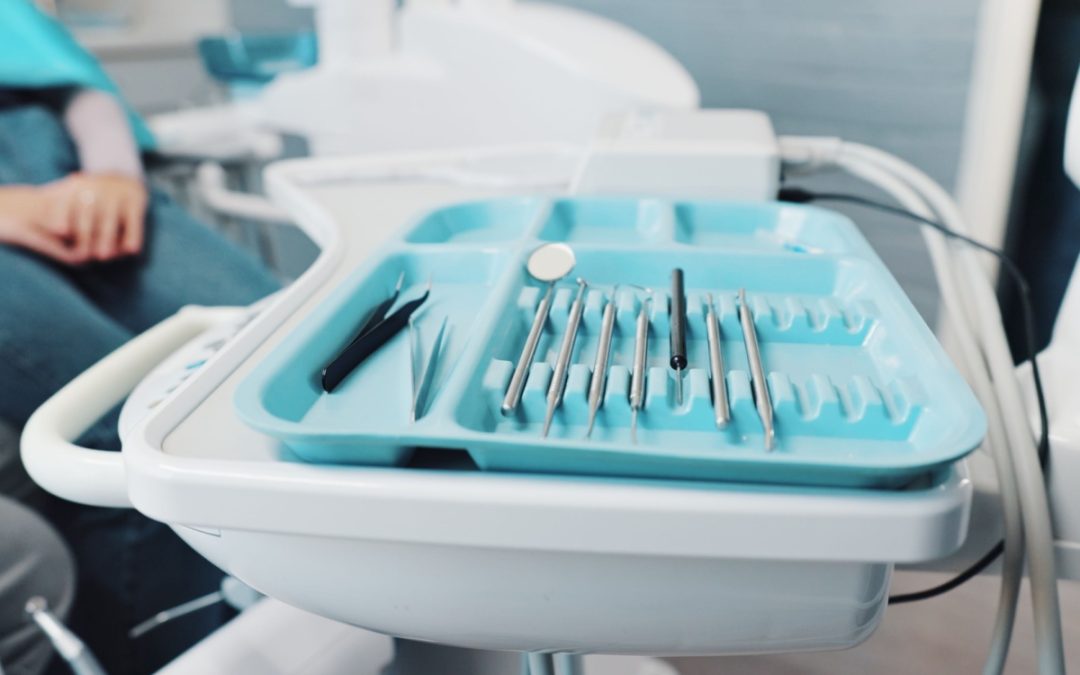
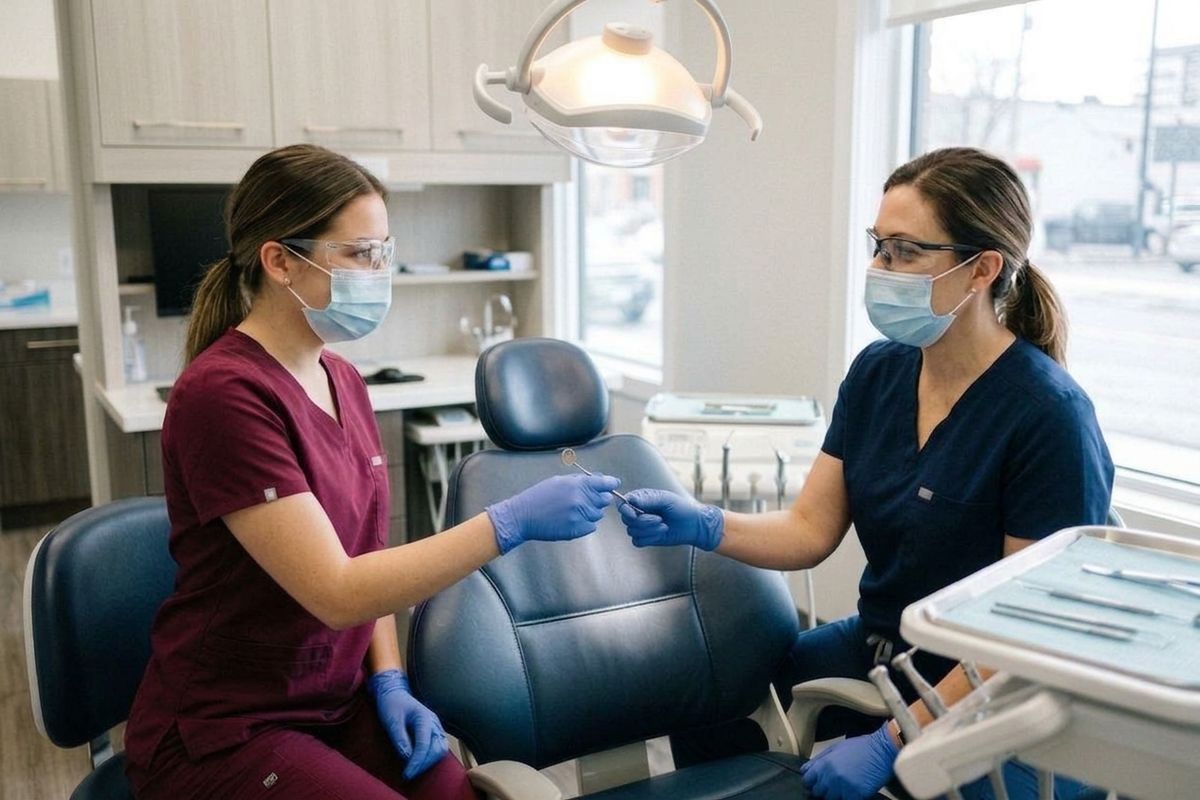
During Risio’s in-person clinical training, you can become familiar with dental instruments, work areas, and safe routines. You may practise how to prepare materials, pass instruments, organize supplies, and keep the treatment area clean. Repeated practice can help each step feel more natural.
Risio’s clinical training gives you a place to apply what you studied online. An instructor can observe your technique and provide feedback. You can then adjust your hand position, pace, or preparation before you enter the workplace.

Your Online Study & Clinical Practice
Risio’s online dental assisting modules can fit around work, family care, and travel limits. You can complete assigned coursework from home, which may reduce how often you need to travel. You still need time for study, deadlines, and required clinical training days.
Risio’s distance delivery model can be useful when you live far from a traditional campus. It can also support a dental assistant career change when you can’t relocate for an in-person program. Check the technology needs, weekly schedule, and clinical training expectations before you commit.
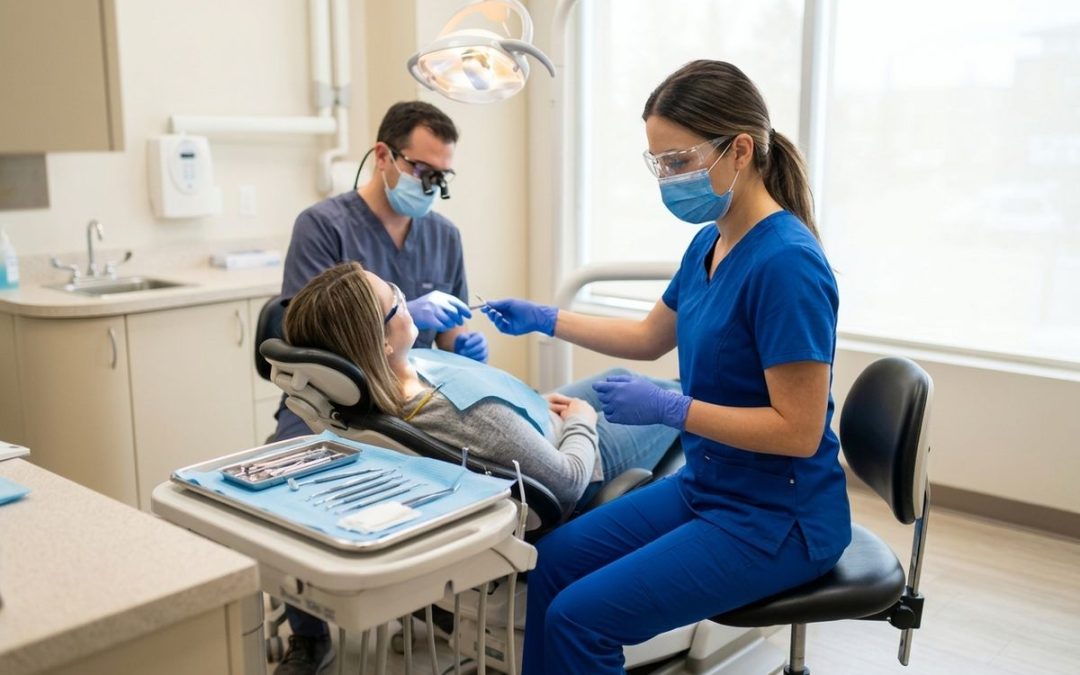
At Risio, online study doesn’t replace hands-on practice. Your in-person clinical days can help you work with instruments, follow infection control steps, and practise chairside duties.
Your Accreditation, NDAEB Exam & Registration Steps
Risio’s Dental Assistant Distance Delivery Diploma Program is accredited by the Commission on Dental Accreditation of Canada. Students in Risio’s program take the NDAEB national exam after graduation. Registration rules vary by province, so review the requirements where you plan to work.
A dental aide course and a dental assisting diploma are two different programs. Risio’s Dental Assisting Diploma is designed to lead students toward the end goal of becoming a dental assistant.
The NDAEB national exam process is the same across the country for students in Risio’s program. Registration requirements can still vary by province, so confirm the current process with the dental assisting regulator or association where you plan to work. Ask which documents and fees apply to you after graduation and the NDAEB exam.
Your Career Goals & Next Steps
Your next step should fit your daily life and long-term plans. Research Risio’s program details, including tuition, added fees, program length, student support, clinical training dates, and travel costs. If you work now, map your study hours and clinical days around your current commitments.
You can also explore orthodontic module training after you review the requirements for your future role. This added education may help you develop skills for certain orthodontic duties, based on provincial rules and employer needs.
Risio Institute for Digital Dental Education offers flexible dental education through online coursework and in-person clinical training. To explore the Dental Assisting Program, contact us, or take the quick self-assessment to see how your education, work schedule, and goals may fit the program entry process.